What is “Non-Invasive Fat Reduction”?

What is “Non-Invasive Fat Reduction”?

“Non-invasive” means a procedure is performed without making any surgical incisions in your
skin. “Non-invasive fat reduction” melts away body fat without undergoing surgery. There is
an extensive list of benefits which non-surgical body sculpting technologies offer, including
shorter procedure times, minimal downtime afterwards, the best aesthetic results considering
side effects and recovery period, permanent results (assuming patients adopt a healthy lifestyle
after the procedure), no anesthetic is needed, no normal risks of surgery, such as fat embolism,
bleeding problems, or extended post-operative recovery phase, no risk of infection, no
requirements for pre- or post-operative medications, and FDA approval. I recently announced
my acquisition of the new and innovative “TruSculpt 3D” by Cutera. In only one treatment, the
controlled, monopolar radio frequency body sculpting platform offers patients up to a 24% non-
invasive fat reduction.

Non-invasive fat reduction cannot provide the level of results that a patient typically receives
with surgery, such as tummy tucks or liposuction for the midriff. However, when considering
these overall benefits, there is nothing more advantageous than TruSculpt 3D. For patients
who don’t wish to have, or cannot have surgery, non-invasive fat reduction procedures will
improve skin tone, tighten the skin envelope, and reduce fat. These treatments also will not
leave patients with loose skin or irregularities of contour that are often seen with patients who
undergo the disappointment of non-responsive CoolSculpting treatments.
Non-invasive fat reduction is not for patients who want to lose weight. But for anyone who has
plateaued in their battle with weight loss and aggressive exercise plans, it can make a big
difference!

Cup Size and Implant Size

Congratulations on your decision! Your next step is to schedule a consultation with a board-certified plastic surgeon (or a double-board certified surgeon, like myself). We will conduct a clinical examination, including getting base width measurements. I prefer to utilize actual implants with you wearing a bra, and in a T shirt, so that you can truly assess your new figure and your projected appearance in multiple views of your chest shape, morphology, projection and overall aesthetic. We call this “custom sizing” so you can obtain the best view before you have your procedure. By adding this to our consultation about your goals and expectations, you will be very happy with the size after your surgery.

Unfortunately, there is no relationship between a breast implant size and breast cup. Each implant manufacturer has a different opinion of what the next size cup is. Although there is general agreement as to what is big or small, the exact volumetric enhancement is not calibrated. This is again why your main consideration for your decision should be how you would like to look in the mirror, both in and out of clothing. Breast augmentations have become one of the most popular procedures that we perform in my practice. I consider it one of my specialties, and my whole staff is very good at guiding patients comfortably through the entire process. We will soon launch a new website specifically featuring many of my patients who are thrilled with their outcomes. There is no better way for me to perform “Artistry that changes lives” so I hope you call my office for a consultation soon.

Plastic Surgery as Christmas Gift

Just as the number of plastic surgery procedures has increased, more people are making it their gift, especially for the holidays. Many are purchased by romantic partners, and a survey of RealSelf community members found that, of those receiving such a gift, 75% received it from their partner. Facials and fillers are very popular as
gifts. Or a wife may give her husband an eyelid lift, or he might surprise her with a breast augmentation.

If the recipient has already had multiple conversations about a procedure or had a consultation with a plastic surgeon, chances are very good your gift will be well received. It can be more complicated if those conversations haven’t happened. If you aren’t reasonably certain that this is something your loved one really wants, your gesture may be perceived as an awkward hint, or as more of a gift for you. I suggest that you look for opportunities to mention the possibility of having a procedure for yourself, and watch their reaction. Many times this will reveal their own interest.

If you decide to do this, I strongly recommend that you let the recipient choose their actual board-certified Plastic Surgeon, because it is most important that patients feel comfortable with their doctor. I also suggest that you think twice before pre-purchasing procedures from Groupon-level centers. All doctors and facilities are not the same. We sell many gift certificates in our office, and we also offer them on our website so you can
buy and print them, even on Christmas Eve!

How To Select Plastic Surgeon

You don’t want a GOOD plastic surgeon, you want an EXCELLENT one! After almost 25 years in private practice, I know it is difficult to find a plastic surgeon you can trust to give you results you want, and who you are comfortable talking with and being around.

I think both aspects are extremely important, and I try to provide both to my patients. First and foremost, I strongly recommend that you only see a board-certified plastic surgeon (or even better, a double-board certified surgeon, like myself). Today, it is easy to find this information on physician websites such as plasticsurgery.org for the American Society of Plastic Surgeons, or popular review sites like RealSelf.com or
justbreastimplants.com. This is also true for non-invasive treatments, such as fillers.

Just because a dentist or a general physician can give you Botox, it doesn’t mean that you should trust them to! Knowing the precise location for injections is extremely important to attain the finest results, and to avoid distortion or prolonged numbness for many months. Your plastic surgeon will also determine whether an injectable filler is best for your anatomic condition, or whether a different treatment would best suit you. When meeting, you need to feel good about your potential surgeon and their staff. Ask to see a gallery of their actual patients. Be sure to ask about the hospitals or surgery centers they are affiliated with. By the end of your consultation, you should feel the doctor understands you and your desired results, and that you like and can trust them as a both a surgeon and a person, to give you your best long-term outcome. Good luck with your decision.

Neck Lift and Recovery

The loss of youthful contours in the face and neck can be due to a variety of factors, including
heredity, gravity, environmental conditions and stress. A neck lift, known medically as a lower
rhytidectomy, is a surgical procedure that improves visible signs of aging in the jawline and
neck. Specifically, neck lift surgery can treat excess fat and skin relaxation in the lower face that
creates jowls, excess fatty deposits under the chin, and loose neck skin. Some patients consider
having a full facelift, but are really concerned about excess wrinkling of the neck skin, a double
chin or turkey wattle and jowl lines. If the neck area doesn’t match the upper facial
appearance, a neck lift may be a good solution.

During your recovery, a bandage could gently be placed around your face and neck to minimize
swelling and bruising when your procedure is completed. A thin tube may be present to drain
any excess blood or fluid that may collect under the skin. It is important to keep your head
elevated above your heart to minimize swelling and to keep your head straight. You will have of
course, have post-surgical appointments, but I also give you instructions how to care for the
surgical site and drains, and medications to aid healing and reduce the potential for infection

Sometimes other facial rejuvenation procedures are performed at the same time, such as a
brow lift to correct a sagging or deeply furrowed brow, or fat transfer to add fullness to the lips
and cheeks and reduce the appearance of wrinkles, or eyelid surgery to rejuvenate aging eyes.

I Need A Nose Job

Rhinoplasty, sometimes called a “nose job” or “nose reshaping,” is one of the most common plastic surgeries. Because the nose is such an obvious feature, your hesitation is also common. I do not know if you are experiencing one of several cosmetic conditions that rhinoplasty typically addresses: nose size in relation to facial balance, nose width at the bridge or in the size and position of the nostrils, nose profile with visible humps or depressions on the bridge, nasal tip that is enlarged or bulbous, drooping, upturned or hooked, nostrils that are large, wide or upturned, and nasal asymmetry. Rhinoplasty can also correct impaired breathing caused by structural defects in the nose.

Rhinoplasty results are relatively permanent, but not instantaneous. Post-surgery swelling remains for a few weeks, and it often takes up to a year of gradual changes before your nose refines to its permanent outcome.
To help calm my patient’s nerves, I take whatever time is needed to discuss realistic expectations, and to explain what happens during and after surgery. It may help if you bring a photo of how you would like your nose to look. We also utilize the latest in Mirror® imagery morphing digital software to simulate your most realistic outcome. My ultimate goal with every rhinoplasty procedure I perform is to create balance and correct proportion for each patient’s individual face.

Having a surgeon personally discuss everything with you should quell those nerves. Please call my office so we can talk about your specific desires.

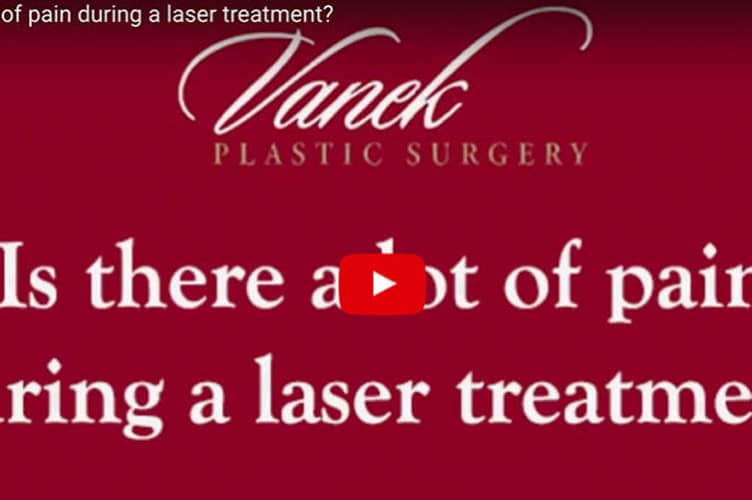
Pain During Laser Treatment

Dr. Vanek Translation:
Well, I probably did 15 lasers today. Most people characterize it as a snap of a rubber band. And on three of the patients I did ‘Forever Youngs’ (specific laser procedure) and on them they had probably 2000 pulses of laser energy on their face.
We take our time first to numb you and then we put gel on you, and then we reassess you during the procedure.
As I’m doing it, I’m asking you, “Hey are you comfortable and are you good?”
Because if you’re not, I stop, I put some more gel Lidocaine on you, or it’s called LP. And make you really comfortable.
So that, I’m not going to race through this just because I wanna blast your face, and get you out to the next thing. I am going to make you have a very comfortable experience.
Because these laser treatments, sometimes they’re the only treatment you have forever. But I want to make sure you’re having a really good, comfortable experience.
Sometimes I see patients that have had laser treatments elsewhere. And they say “well it was miserable for me.”
And I can assure you that is not the experience my patients tell me they have. I get feedback from them in real time. I’m monitoring you during the procedure.
I’m making sure the energy wave-lengths I’m selecting are appropriate for your skin.
Sometimes we have goals that are mutual. Let’s say they’ve got this dark spot, I’m really gonna go for it. And that’s gonna give you a little more recovery time.
But I try to share that with you before we are in the arena with lasering you in my laser office.
So, does it hurt a lot? Depends on what your temperament is. Some patients I recognize that they have some anxiety issues I recognize their pain thresholds aren’t that good.
I’ll give you some pre-medication. I basically give you a prescription that you get some Valium and some Percocets. And you show up with taken those right in the office. And then somebody drives you home.
So, those patients have very little discomfort.
And they say “hey that was great, I feel great” In a day, or a week, or a month, they say, “I look great, my laser looks great!”

Happiness Found

Published: 06/20/2017 on Mimivanderhaven.com

by Patricia Nugent

For most of us, a trip to the beach sounds heavenly…shedding the cover-ups, hitting the waves and lazily soaking up the sunshine.

For Kalyn, however, a trip to the beach filled her with dread.

“I hated how I looked in a bathing suit,” says the vivacious 24-year-old. “Since high school, sporting an A-cup has made me self-conscious about pretty much everything I wore. Nothing ever fit right. I never wore anything tight or low-cut.”

The past two years, she has consulted with several plastic surgeons to explore an augmentation, but never felt comfortable about the doctors or the procedure—so she just let it go.

Then two of her mother-in-law’s friends had work done by Dr. Paul Vanek in Mentor and raved about the experience and she thought she’d revisit the idea earlier this spring.

Everyone Was Just Like Family

“As soon as I walked into the office the vibe was totally welcoming. Everyone, from the receptionist to Cosmetic Coordinator Mary Jo, felt like girlfriends,” she says.

“And Dr. Vanek was amazing, explaining everything to me and helping me try on different sizes of cups to see which looked best.”

Recovery time was a consideration that kept worrying her. Kalyn is a busy healthcare consultant managing wellness programs for Fortune 500 companies. But Mary Jo reassured her that the recovery time would be minimal.

After discussing it with her husband, Ronald, who is in the U.S. Army stationed in Georgia, she decided to pull the trigger.

In the end, she opted to go up to a DD-cup, as it best complemented the proportions of her broad-shouldered, five-foot, seven-inch frame.

She reports the surgery that she once feared was “an absolute breeze.” After having it on a Friday, she was back to work on Monday with very little discomfort.

“I couldn’t possibly be happier and wonder why I waited so long,” she says. “The sundress I’m wearing right now? Something I never would have worn before the augmentation.”

Keeping a Natural Teardrop Shape

When fitting the ideal size to a patient, Dr. Vanek says he urges them to make their final decision based on how they want to look, not how they think others think they should look.

“Everyone has their own unique esthetic,” he explains. “I don’t tell them how big or small they should go; we come to the decision together.”

Using highly cohesive gel implants placed through four-centimeter incisions beneath each breast, he is able to achieve the most natural look. Once placed, they settle into a teardrop shape and he finishes the procedure by delicately lasering the area with a Sciton BroadBand Light (BBL) treatment to decrease bruising.

Kalyn says Dr. Vanek and his staff went above and beyond her expectations.

“If I ever opt for another procedure I will be coming back here,” she adds.

In addition to breast augmentation, breast lifts and reductions, Dr. Vanek performs a host of rejuvenation procedures for body and face, from facelifts, neck lifts, brow lifts and eyelid lifts to rhinoplasty, liposuction, tummy tucks, Brazilian butt lifts and more.

Dr. Paul Vanek is double board certified by the American Board of Plastic Surgery and the American Board of Surgery and is a Fellow of the American Society of Plastic Surgeons. His offices are easily accessible from I-90, located at 9485 Mentor Avenue, Suite 100, in Mentor. For more information, call 440-205-5750, or visit MentorPlasticSurgery.com.

An Open Letter of Hope.M Kohl

Dear girlfriend who just found out you have breast cancer,

Yes, I know, I don’t know you and you don’t know me, but we are now and forever linked by a shared experience, breast cancer.  Your story and my story are probably very different, no two are the same. But no matter how different our journeys, I feel connected to you and that connection makes me want to reach out.

If I could, I would ask you to meet me for a walk in the park or a cup of coffee so we could share our stories in person. But this will have to do.

I am going to tell you my story. My hope is that you find this story when you are up in the middle of the night or early morning in the deep dives of a Google search. My wish is that by reading my story you begin to feel like you are not alone. Because that is what I did, I read stories and called girlfriends walking this path and it gave me comfort.

My story begins with a mom who had breast cancer when I was in college. So when I turned 32 I had my first mammogram.  I have had so many mammograms, ultrasounds and MRIs, that just those records alone have their own folder at my surgeon’s office.

Two years ago, 18 years after my first mammogram (yep, that makes me 52 now!) my story took a turn with the diagnosis of Atypical Lobular Hyperplasia (ALH) and Lobular Carcinoma In Situ (LCIS). Although not cancer, these precancerous conditions increase the chances of cancer by a lot! After 4 needle biopsies and 2 surgical biopsies over the next 2 years, in February 2017, I was diagnosed with PLCIS. That added P to the abbreviation LCIS stands for pleomorphic. I had to practice pronouncing it and turn to Google to figure out what it meant.  What it meant was that I now had breast cancer. But PLCIS is not common, so there is not a typical treatment. In fact, the suggested treatment is to approach it like DCIS. There isn’t even a medical code for it. Some doctors added DCIS to my diagnosis; some just left it at LCIS. All agreed that for me a bilateral mastectomy was the best treatment.

My next logical response was to learn everything I could about mastectomies. There is a lot out there! An overwhelming, where do I begin? Oh my! amount of information.

And this is where my story took an interesting turn.

Just a few day before my surgical biopsy in February, there was an article in our local paper about a new procedure for mastectomy and reconstruction that was being performed by a friend of ours from church, Dr. Paul Vanek. The article told the success story of Georgi Anderson who had recently had the surgery. My mom loves to read the paper and share interesting articles with our family, so when she saw the article, she cut it out and sent it to me. I got it in the mail and gave it a quick look, thinking “that’s nice, but I won’t need that.” I was sure this biopsy, like the 5 before it, would not lead to anything new.  As you already know, I was wrong.

So as I sat hunched over the computer researching mastectomies, my head swirling from everything I had read, I suddenly remember the article my mom had sent me.  Digging through the mail I reread the article. Oh how a few days can change your perspective on the importance of a story.  I read it again and again. Pre-pec nipple sparing mastectomy . . . what? This procedure had not shown up in my searches. So I Googled again. And now I was really lost.  I mean seriously, it is enough to have to wrap your head around the whole, I have cancer thing, now I had more choices to make.

The next part of the story might seem like it is made up. And in fact when it happened, I actually turned to my husband and said to him, “You have got to be kidding!”

My head full, way too full of information, I left for church.  I sat down and not 2 minutes later, our friend, Paul Vanek, the doctor in the article, walked in and sat down right in front of me! Crazy, right! I have witnesses, if you don’t believe me.

You know what is better than Google to help you research a topic to make a decision? A caring, accomplished surgeon sitting in front of you that can answer all of your mind-boggling questions.

And the next best thing? A girlfriend who has been through it. Within a short time after talking to Dr. Vanek at church, I was able to talk with Georgi Anderson, the woman featured in the newspaper article, my mom had given me. Georgi shared her story with me, answered my questions, calmed my fears, and let me know I was not alone.

Fast forward 2 months.

On April 17, 2017, I had a bilateral pre-pec skin and nipple sparing mastectomy with reconstruction.

I know, I know, you have so many questions. What is a pre-pec skin and nipple sparing mastectomy with reconstruction? Why did I choose it? How was it? How am I doing now?

Let me start with what was most important for me, Dr Vanek, his staff and the care team at TriPoint Hospital.

As a teacher, I value knowledge, skill and heart. I want students to leave me with knowledge and skill, but most important I want them to use the knowledge and skill to make the world better.

I hold people to a high standard of knowledge and skill. Because I have known Dr. Vanek for over 20 years, I know through personal experience and the experience of many friends, that he is exceptional at his craft. But what has always impressed me most about Dr. Vanek is his commitment to caring for his patients. And this extends to his entire staff.

When I went to my first pre-op appointment, I was shaking, literally. The whole experience was finally real. I wasn’t just sitting at my laptop Googling; I was making a decision about something that was really going to happen to me.  From the moment I was greeted at the desk, I started to feel the commitment to caring at Dr. Vanek’s office. Kind words, an offer to get me a glass of water, an encouraging hug, reassurance that I was in good hands and would be well cared for. Each and every person I came into contact with that day demonstrated that this was a place committed to caring for patients first. And the person who demonstrated this the most was Dr. Vanek.

Now as you can guess from all my references to Google, I am very committed to understanding and being an active participant in my health. But at this moment in my life, what I needed more than anything was to hear and feel that it was going to be OK.  That I was not alone in this journey and that I was in good hands. And even before I heard all the specifics of the surgery and reconstruction, I was at peace.  

So back to your questions. What exactly is a bilateral pre-pec skin and nipple sparing mastectomy with reconstruction? As a 2nd grade teacher I am hardly qualified to describe this in detail. And so if you click here: bilateral pre-pec nipple sparing mastectomy with reconstruction (need this to be a link to the specifics about the surgery), you can get the medical specifics.

But I can tell you what it meant to me and why I chose it.

This type of surgery meant that I would still “look like me” although a LOT perkier! Birthmarks and freckles and scars from my first 2 surgeries would still be there.  I know this sounds funny, but especially my scar from the February surgery was important to me. That scar, as my youngest daughter said to me, “is your sign of hope.” It meant the cancer had been found and was being treated. Having skin and nipple sparing surgery meant that these parts of me, these signs of hope, remained.

This type of surgery meant I would go under anesthesia with breasts and I would wake up with them.  I know this is not part of everyone’s story. I am very close to women who could not have this experience. I was very grateful for this being a part of my story.

This type of surgery meant that I was off prescription pain medicine within 4 days of surgery and off of over the counter pain meds after 3 weeks. This was important to me not because I am against pain medicine or have a high tolerance for pain, but because of the role pain medication has played in my life previously.  For many years, I struggled with severe headaches and needed over the counter pain meds to treat the pain.  Now, whenever I can minimize the use of pain medicine I do.  Because this surgery placed the implant over my muscle and did not require expanders, my pain and thus the need for pain medicine was greatly reduced.

This type of surgery meant I would not lose muscle strength or mobility. A few years back I lost a considerable amount of weight through changing what I eat and through exercise.  This weight loss and addition of regular exercise was critical in the reduction of my headaches.  Being able to run, lift weights, and do yoga is an important part of how I now live every day.  Having an option for a surgery that would enable me to return fully to these activities was important to my returning to the lifestyle that makes me be the best version of me.

This surgery meant I could get back to life sooner. For me that meant I could be there for my daughter when she had her wisdom teeth out, just 3 weeks after my surgery.  Always the planner, I purposefully, scheduled my surgery with 6 weeks left in the school year so my absence was the least disruptive to my students. Because of this, I did not have to return to work 6 weeks after surgery because summer break had begun. But I feel confident that I could have, if that timing had been different.

During the 6 weeks of recovery, I did need to rest and lay low. The first week, I had a fancy thing called Prevena Incision Management System and drains. I am amazed at the things people invent that make getting better easier.  Don’t be intimidated by these things. They explain all of it to you before you leave the hospital and let you practice anything you need to do.  I was fortunate to have the assistance of my two older daughters, who graciously transitioned from advertising and media professionals to nursing assistants to help me out. After the first week with the removal of the Prevena, I was more comfortable and could take care of myself with little assistance. My drains remained for 17 days. A gift of a specially designed camisole, from the Lake Hospital Systems Breast Center, made it easy to manage the drains. Throughout the 6 weeks, I learned that healing takes time and energy. Even though I did not do a lot, my body was very busy healing and so I found I was tired. I rediscovered the power and joy of naps! I also learned that this part of the journey is very individual. Everyone heals in their own way. If it takes a little longer or you feel better sooner, that is exactly how it should be, for you.

What does my future hold? This surgery was the treatment I chose as best for me. I am now cancer free and do not need further treatment. I am so grateful for this.  I find comfort in knowing that Dr Vanek will continue to be a part of my future. I will see him over the next year, so he can carefully watch over my continued healing from the surgery and make any necessary adjustments.  Sometimes, 6 months after surgery, there is a 2nd simple surgery to add fat around the implants.  And although I appreciate all the generous offers for donated fat, I will be happily using my own! Another important deciding factor in selecting to have Dr. Vanek do this surgery is that he or an associate of his will see me yearly for the rest of my life. Although I love to be in charge, this is one part of my life, where I want to know that there is an expert keeping an eye on things for me.

So dear girlfriend, that is my story for now.  I hope reading it helped to answer some of your questions and brought you some comfort during this challenging time in your life.  I have learned many life lessons the past few months. But the most important lesson is that there are many, many kind and loving people in this world and their love will carry you through this.

I am sending some of that love, to you, right now.

Your friend,
Mary
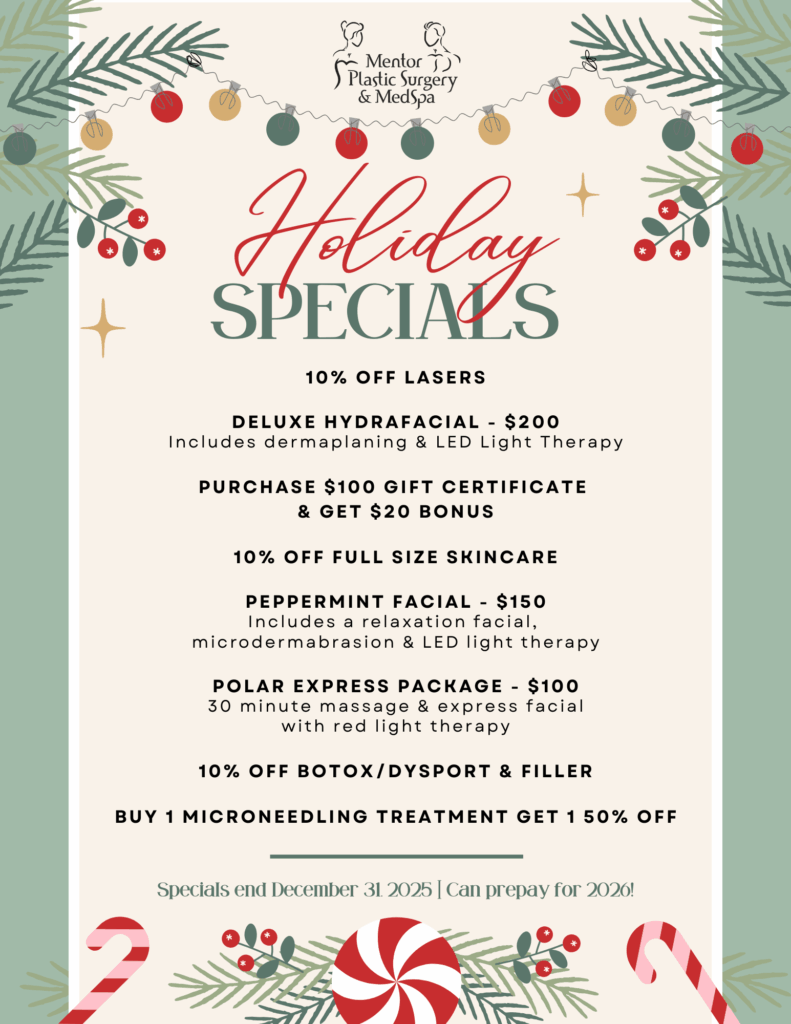
Spread the holiday cheer!

prepay for 2026!