The holidays are a time for reflection and renewal. We reminisce about years past and look forward to the future. What are your plans for the new year? Would you like to find a new job, or maybe a new relationship?
Future goals aim to improve our lives. And feeling confident about your appearance as you go after those goals is a great way to start.
Double board certified general and plastic surgeon Dr. Paul Vanek’s goal for the new year is the same as it’s been for the 25 years he’s been in practice.
“My goal is to accentuate my patients’ natural beauty and increase their confidence,” says Dr. Vanek. “My education and experience have given me the tools to help people achieve their goals, with the utmost respect for their personal circumstances.”
Whether through facial rejuvenation, skin treatments, body sculpting or plastic surgery, Dr. Vanek and his staff treat each patient with kindness, sensitivity and respect from the first phone call to the last follow-up visit and beyond.
“Of course people are nervous about surgeries and procedures, no matter how simple or involved they might be,” says Mary Jo, Cosmetic Coordinator.
“We make the entire experience, from making appointments to post-surgical care and attention, as comfortable as possible. Our patients trust us and know that we truly care about their outcomes. We take each relationship very seriously and personally, and our patients feel that.”
The journey patients take with Dr. Vanek and his staff begins with education. Anyone considering surgery or procedures has often done their own research. Since the products and technology are constantly changing, Dr. Vanek is always educating himself on new technologies and takes the time to also educate patients on all of their options.
“Technology plays a big role in my practice,” says Dr. Vanek.
“I only use scientifically proven modalities of care. My patients are never an experiment. My background as a biochemist and researcher makes me uniquely qualified to evaluate emerging technologies and techniques and integrate them into my practice.”
Vaser Lipo is one technological advancement that offers patients a more precise option for liposuction.
“Vaser Lipo is wonderful alone or in combination with some of our other procedures,” says Dr. Vanek.
“Ultrasonic waves target only the fat cells, and lower blood loss means less recovery time, allowing for more specific areas like the arms and neck to be treated.”
TruSculpt iD is another advancement that uses radio frequency energy to dissolve fat while tightening skin in a single 15-minute treatment. It is excellent for areas where fat is difficult to lose, and no surgery means no downtime. Dr. Vanek is the only area source for this breakthrough technology.
“Radio frequency energy techniques are at the forefront of medical body-sculpting treatments,” says Dr. Vanek. “TruSculpt iD improves skin tightness and reduces body fat without leaving excess skin.”
Broadband light (BBL)therapy is another newer technology that actually can reverse the aging process and the effects of sun damage.
“Forever Young BBL is non-invasive and can be used alone or in conjunction with surgery,” says Dr. Vanek.
“The treatment focuses on age spots, freckles, redness and small vessels, restoring damaged skin with long-lasting results. The technology addresses aging at the molecular level and actually represses the aging genes.”
Dr. Vanek’s practice also offers a full line of dermal injectables. Botox, Dysport and Xeomin help with fine lines and wrinkles of the forehead, mouth and eyes. Fillers like Juvederm, Restylane, Sculptra, Radiesse and Kybella all can add natural-looking volume to the face, giving patients a refreshed look.
“Only your best friends will know you’ve had a treatment or procedure, and only because you told them,” says Mary Jo.
One of the reasons why his patients are so happy with their fillers and injectables is because Dr. Vanek performs every treatment himself. His intense knowledge of the anatomy allows him to pinpoint precise locations where injections will create maximum benefit, while also being the most undetectable.
Dr. Vanek is trained and experienced in every area of plastic surgery. He has become nationally recognized for his procedures in breast augmentation, face-lifts, mommy makeovers, eyelid surgery, and Vaser Lipo.
Since he is also board certified in General Surgery, he can also uniquely perform procedures such as pre-pec mastectomy reconstruction with nipple-sparing surgery.
One of the few surgeons in the country to perform this surgery singlehandedly, this efficiency allows for very significant reductions in time, cost and both physical and emotional discomfort for patients. And with only one doctor involved in all procedures, eventual outcomes have been excellent.
“No matter what my patients are looking for, my goal is to help them look and feel like themselves, but even more beautiful,” says Dr. Vanek.
“We take great care in and receive our own fulfillment by guiding every patient through their unique journey to being the very best they can be.”
Many people want to look their absolute best during the holidays. In fact, the American Academy of Facial Plastic and Reconstructive Surgery says the demand for cosmetic enhancement procedures and surgeries jumps about 25% between Thanksgiving and New Year’s.
They also acknowledge that gifting yourself or loved ones with plastic surgery and aesthetic treatments is becoming a huge trend, from gift certificates for facial rejuvenation treatments to more significant surgical procedures or makeovers.
The short answer to your question is “yes,” but there are many considerations. First, I urge you to understand all of your options and not feel rushed to make a decision. Don’t allow yourself to be influenced by seeing a picture of yourself from holidays passed, or a celebrity who recently had plastic surgery. If you want to get more information, you should contact a plastic surgeon’s office and tell them you want the earliest consultation and surgical scheduling.
Successful practices like mine are especially busy during the holidays, so openings are more limited. Lastly, you should consider your own levels of activity and visibility during this busy season. While a vacation might allow personal healing time, other people may just be too busy to allow post-surgical healing to go unnoticed. In such cases, you may consider non-surgical treatments, such as injectables, skin resurfacing with lasers and peels, and lip, chin and cheek enhancement with fillers and fat transfer before the holidays. These will allow you to look better through the season, and then you can take your time to make final decisions.
Thanksgiving Day just passed but hopefully we wake every morning with gratefulness in our
minds and hearts. Beyond concerns for my patients’ physical health and appearance, I also
care about their inner peace and purest beauty that comes from within. I would like to
dedicate my column today to a few favorite quotes that remind me of the true meaning of
being thankful.
As we express our gratitude, we must never forget that the highest appreciation is not
to utter words, but to live by them. – John F. Kennedy
When we give cheerfully and accept gratefully, everyone is blessed. – Maya Angelou
Thanksgiving is a joyous invitation to shower the world with love and gratitude. – Amy
Leigh Mercree
Not what we say about our blessing, but how we use them, is the true measure of our
Thanksgiving. – W.T. Purkiser
Thanks are the highest form of thought, and gratitude is happiness doubled by wonder.
– G.K. Chesterton
Gratitude is the inward feeling of kindness received. Thankfulness is the natural impulse
to express that feeling. – Henry Van Dyke
We should certainly count our blessings, but we should also make our blessings count.
– Neal A. Maxwell
Best of all is it to preserve everything in a pure, still heart, and let there be for every
pulse a thanksgiving, and for every breath a song. – Konrad Von Gesner
The more you practice the art of thankfulness, the more you have to be thankful for.
– Norman Vincent Peale
For many reasons, general anesthesia allows the best management of patients by the medical team. The general anesthetic protects a patient’s airway during surgery so they have an adequate gas exchange of oxygen and carbon dioxide from their blood through the anesthesia machine. It also abolishes patient movement and avoids distraction of the surgeon. When compared to patients who are awake, aware or under conscious-sedation drugs, the level of motion, especially around the eye area, is still a consideration for those having eye and face procedures.
Many patients also prefer it, because they like that they can emerge from a procedure with only the recollection of getting a little medicine in their vein. Most patients awaken from surgery very comfortable and feeling like only a few minutes have gone by. I choose to take the highest level of professional management by delegating anesthesia
considerations only to board-certified anesthesiologists who utilize very short-acting medications both through the vein and inhaled through the lungs. They monitor the surgery from start to finish to maintain beautiful level of sedation and anesthesia so that I can perform surgery with the best physiology parameters.
In the case of procedures that can be performed safely under local anesthesia in the office, I provide local anesthetic in order to “block” the area that is being worked upon that adds to your sense of well-being and comfort after the anesthesia wears off. Expert and effective anesthesia care will increase the patient’s safety and improve peri-operative outcomes in patient satisfaction.
You probably know you’ve asked about one of the fastest growing non-invasive (non-surgical)
treatments for body-contouring troublesome areas. Most people have seen the ads and billboards for
cold sculpting procedures that supposedly work by freezing fat. These treatments are often given
without a doctor’s care, including at spas and salons.
Many patients have asked me why I don’t provide these freezing treatments, and it’s because I did not
see consistently positive results. In fact, I have treated patients who came to me disappointed with
their results after freezing treatments. Some even said they gained weight and inches.
After extensively researching available products, I offer a non-surgical solution providing excellent
results in short sessions, and without downtime or recovery. The product is called “truSculpt 3D,” and
it utilizes heat to target fat in body areas that are resistant to diet and exercise. In a heat application,
there is a sensation of warmth, but without pain. There is no pulling and pinching that is typical with
freezing procedures.
truSculpt 3D has been clinically proven to decrease circumference and diminish fat, which I believe is
the ultimate comparison factor. My research shows that it also gives more prominent and dramatic
results for a larger variety of body types. Recently cleared by the FDA, it is manufactured by Cutera, a
respected 20-year worldwide medical company. We were one of Northeast Ohio’s first facilities
offering truSculpt 3D.
I strongly recommend that body-contouring is only performed by and after consulting with an
experienced, board-certified plastic surgeon. Please call my office so we can discuss this further.
Question: I need multiple procedures; is it better to do each surgery separately or all at once?
Answer: This is a decision that can only be made after our private consultation where we discuss your goals, and I have a better understanding about your physical health and lifestyle. But more often than not, patients wanting multiple procedures schedule several of them at the same time because there are many benefits to doing this.
One of the main benefits is cost savings. Surgical procedures are performed in a hospital or medical center, and require other medical professionals, including an Anesthesiologist. Combining procedures will cost less than scheduling facilities and professionals multiple times.
Another benefit is your recovery time because your body can heal from multiple surgeries simultaneously. This is especially important if you are employed or have regular in-home responsibilities. With some people having concerns about taking pain medication, your overall intake of post-op medication will also likely be lessened when you combine surgeries.
There may also be an emotional benefit, which could even allow for a speedier recovery. Many patients approach their day of surgery and go through recovery with more optimism and energy when they know that they will see significant improvement in multiple areas after this one day and recovery period.
If you are curious about which procedures are most commonly combine, a breast augmentation or reduction is often combined with liposuction or a tummy tuck (abdominoplasty) as they are located on the same area of the body. A facelift and neck lift can easily be combined, along with most other facial cosmetic procedures.
Please call my office and I am happy to help you decide what is right for you.
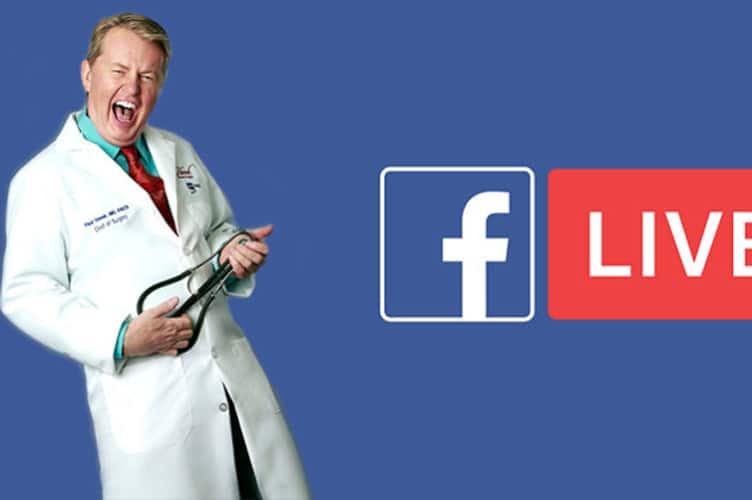
Transcription from the September Facebook Live with Dr. Vanek:
– Hey, welcome to Facebook Live. I’m Doctor Paul Vanek. Welcome to Facebook Live, still Paul Vanek.
So if you like your content on Instagram and Facebook, I’d like you to click or share. We’re going to spend the next 30 minutes, share with anyone who’s interested in our live event. I’m going to host you the next 30 minutes and I’m looking forward answering your questions that come through either on Instagram or Facebook. So, Paul Vanek, Mentor Plastic Surgery.
Our first question comes from Nicole. Says, “What is the best kind of bras to wear “after a lift and augmentation?”
My practice, when I perform a breast augmentation with a lift, I typically have a patient on day one after surgery to go into a front clasp sports bra. And the reason I do that is, I don’t really want you to do too much arm exercises right away but eventually we’ll get your arms limbered up in a few days after surgery. Front clasp is convenient because you don’t have to try to put your arms over your head. Number two, it gives a light compression, and so with the incisions for the lift have Steri-Strips or technology dressings on them, they don’t interfere in any way, taking them on and off. I typically let my patients shower one day after a breast augmentation or one day after a breast lift surgery because the incisions will seal themselves in about a day or so after the surgery. So I’ll see you the next day after surgery, take you out of an ACE wrap that’s not cranked on your body and then have you have a transition into a sports bra that we’ve already sized you for at the time of your final consultation and sizing, your custom sizing discussion.
So Peggy says, “I’m 20 years old, “I weigh 120 pounds and I’m 32DD. “Should I get a lift or an augmentation?”
So, Peggy, in the eye of the beholder, I have to examine you in order to make such a determination. I wouldn’t try to answer your question without a full consultation and discussion, ’cause if your shape’s beautiful and you’re happy with your size then you need nothing. If your size is not to your satisfaction, then we have to talk about the consequences of a lift, where the incisions go, where your nipple position is. If your nipple position isn’t ideal at the time of your consultation, I’ll make measurements and go through with you what can be done as maneuvers to optimize your shape with or without a breast augmentation. So, it’s a sophisticated question but truly, without examining you in person and without a full discussion with me, a double board certified plastic surgeon, I would not be inclined to actually answer the question without examining you.
So, I have a question about truSculpt 3D, and that’s kind of fun, so I want to thank Lucy.
Lucy, I don’t imagine you were at our truSculpt event last night, we hosted a bunch of people in my office. We had an introductory offer discussion about truSculpt 3D. That’s for patients who want to have a remediation of their loose skin and their fat areas without surgery. So truSculpt is a radio frequency energy. It heats up your tissues, it’s applied to your skin in 15 minute increments and we usually do four areas, one, two, three, four, one, two, three, four, or arms, or thighs, or even under the neck. And it’s an area treatment that can be performed in the office without surgery, downtime, or anesthesia. So in my discussion with patients, truSculpt 3D is in my armamentarium. So, for patients who don’t want to have surgery, who don’t want to have downtime but have an expectation that they’ll have some results, it works on every patient. TruSculpt 3D is radio frequency, so that means it heats the tissues, it doesn’t freeze it and it tightens the skin, it doesn’t leave it loose and 100% of patients respond to truSculpt 3D. So I’m very much a strong advocate for radio frequency radiation. You may or may not know that in my background, I’ve done research for post electromagnetic fields, microwave radiation and ultrasound research. So I have a very large background in that area. That’s why I’ve adopted a radio frequency energy because it works so well when it’s applied to human tissue. So thanks for the question, Lucy.
Maureen asks me a question about labiaplasty and says, “How is it performed “and is there an extended recovery period?”
So for women who have extra redundancy of their labia, are having problems with either sitting on them, pinching, wearing clothes that don’t cooperate, or even during sexual intercourse, a labiaplasty is a procedure done either under local anesthetic in my office or under general anesthetic, it depends on the patient. I decide that with you at the time consultation. The procedure takes about one hour and in about three weeks you can resume relations. If you’re very athletic, I tell you not to ride a bicycle or a horse, or do things that you have to sit on or have pressure in your pelvic area for about three weeks. All the sutures are absorbable. It will reduce the redundancy in both an XY direction, in this way and this way, So things that are floppy and loose and cause you pain or discomfort, or are just unsightly and you want to have things tidied up, surgery can do that for you as an outpatient under local anesthetic. Patients love the results, I have photographic demonstrations of this when I have a consultation with you and it’s something that women have a very high patient satisfaction for.
Candace says, “Can I have my labia majora “and labia minora procedures done separately or together?”
Now, I’m presuming that if that’s a concern for you, it’s usually associated with either aging or weight loss and they give similar circumstances. The labia majora can become loose and they can be tightened by a surgical excision and closure and scars that are very imperceptible. The labia minora can be surgically reduced in a similar fashion and even with a speculum and light examination, it’s very difficult to tell that a person’s had an expert do their labia procedure. They can be performed at the same time and I would discuss those circumstances with you at the time of your consultation.
Robert asks me, “What is the most effective, “and long lasting procedure for lifting jowls?”
So thank you, Robert, for your question. Jowling is here, it’s the bottom of a trapezoid. If you think of the jawline and the zygomatic line, the nasolabial fold, the preauricular, you can think of this as a trapezoid, meaning a square with asymmetric sides. You can also think of this as a triangle, if you wish to. The SMAS, submuscular aponeurosis, the malar fat pad, and the tissues that are external, descend with time and give a deeper fold and jowling that occur based on your sun damage history, how you pick your parents, what your weight story is, whether it’s up and down a lot or whether it’s even been stable your whole life, people get volume losses as we proceed in life, it’s called facial lipoatrophy. The most reliable method of restoring volume in the mid-face and taking away tissue redundancy is with what’s called a SMAS facelift. S-M-A-S, submuscular aponeurotic system. What the means is through an incision that’s tailored behind the tragus of the ear, the skin is elevated and the SMAS is reefed up into a position that it existed in prior to where it descended with your aging process. Once that’s restored, I use an analogy like the tent, its poles and its ropes. The tent poles are straightened up, the ropes are tightened up, the canvas is draped over and hence it restores the figure and appearance of a youthful face. It has the greatest longevity for people who are undergoing facial aging. So a SMAS facelift has a very long longevity. For patients with a lot of skin redundancy, who can just simply have a quicker procedure, we just do skin undermining with a temple incision and a in front of the ear incision and just tighten up very, very loose skin. They sometimes don’t need a SMAS ’cause they’re so happy with the restoration of the loose skin that they’ll opt for a lesser procedure. But again, because the skin is the canvas analogy of the tent, the skin has the most elasticity, hence it has the most likely to recur with looseness of the jowling area. So I put that in context with regard to having a board certification in plastic surgery and a double board certification in general surgery. I will talk to you about those in the context of your consultation and your consultation process, Robert. So thank you for asking that.
Rosa asks, “What is an endoscopic brow lift, “and is it different than a traditional brow lift?”
Now, all brow lifts are not created equal. So, a brow lift that we used to do, involved an incision from ear to ear, through the coronal area, reflecting open the tissue in a very open procedure, literally exposing your skull, then destroying the muscles, and jeopardizing some of the nerve functions. In an era in which we want to have very natural appearance, we’ve induced, developed tiny incisions in the hair, one, two, three, one here, one here, and one here, each one inch long, using a five millimeter endoscope that’s about this small. The endoscope is passed through the incisions and release this tissue. I even go down to the tip of the nose to give a little nose lift right here. What that does is under direct vision through an endoscopic procedure, much like when we take out the gallbladder, it used to be a big incision and accomplish something that’s complex. Now it’s through a tiny incision, endoscopically, takes one hour, the incisions have woven sutures, there are some fixations in the scalp in an endoscopic procedure that allow a person, through tiny incisions, to accomplish a very, very refreshing appearance. I call it an executive lift because if you can have that incision in your scalp, I don’t shave any hair off your head, you can shampoo your hair tomorrow, put a ball cap on and literally go back to work the next day. For people who are having the idea that there’s going to be a lot of bruising, I prepare them for what kind of downtime they’ll have socially. But that’s going to restore your brow position and actually take away some of the upper eyelid hooding as a synchronous thing, without an eyelid incision. It makes your upper eyelids look great and your brow furrows and your brow position look very youthful. Check out my website, mentorplasticsurgery, for endoscopic brow patients. While you’re at it, click or share for Facebook or for Instagram. Again, I’d like to thank, while I have my Instagram followers’ attention, I’d like to thank the American Society of Plastic Surgery. They’ve enabled me to take my practice and have it spotlighted across the world, take over for a day and demonstrate the kind of things I’m accomplishing in my practice. I was able to share the kind of lovely patients I have, the great patients that come from all over the country to my practice, showing you what kind of procedure outcomes I have, what kind of procedure intraoperative things we’re doing and what kind of results we’re having before and after.
So, I want to thank my Instagram patients, my Instagram Live followers, and I’d like to again thank the ASPS. Thank you so much for allowing me to spotlight my practice.
I have another question from Margaret, “What credentialing does a person have “to have to perform liposuction?”
Now, that’s a great question because credentialing is an issue of a theme for the American Society of Plastic Surgery. Board certification in plastic surgery is the real deal. All other people that call themselves cosmetic surgeons or plastic surgeons that do not have a board certification in plastic surgery or membership in the American Society of Plastic Surgery are people that do not have the same credentials as I have. Patients with credentials to serve in the hospital as a board certified plastic surgeon, are essentially the most vetted by their peers, as are the American Society of Plastic Surgery members, they are vetted by other peer plastic surgeons. Anybody can do liposuction in their office, that’s an unaccredited area and essentially you can do anything you want in Ohio if you’re licensed to practice medicine or surgery. So, we have patients that are dentists, that are family doctors, that are dermatologists, that are all hosts of non-plastic surgeons that are doing what they call plastic surgery procedures. I counsel my patients to assess the credentials of your surgeon; look, have them show you their actual before and after procedural results, have them see whether or not they have the accreditation of the American Society of Plastic Surgery and the board certification in actual plastic surgery. So thank you for that question, Margaret.
Now, Diane says, “what do you recommend as a non-surgical “alternative to liposuction?”
So, patients that I see, I always talk to them about diet and exercise, optimizing their BMI, and then what their weight loss history, weight gain history is. If they’ve been yo-yoing up and down, they have usually poor skin elasticity. Something that’s been designed recently, has entered the market called truSculpt 3D which is a question I had earlier in my discussion. TruSculpt actually tightens your skin. Now, Vaser LipoSelection, Vaser energy goes under the skin and in direct mode targets the fat. But truSculpt goes through the skin into the fat, targets the fat and then stimulates the skin myofibroblasts, these are the connective tissue cells in the skin that actually stimulate shrinkage of your body as you get smaller and lose weight. So I tell people that non-surgical alternatives, the best one I’ve seen right now is radio frequency and that’s delivered through a platform called truSculpt 3D. So thank you for that question, Diane.
I have a breast augmentation question, “Are there any special exercises I can do “after breast augmentation to prevent capsule contracture?”
Thank you for the question, Josie. There are no per se questions. I do have patients do some exercises in the doorframe with range of motion of their arms and pec before and after surgery. We provide very particular instructions but there is no particular exercise that I can look you in the eye and say, “That will prevent a capsule contracture.” Capsule contracture is a result of biofilm which can happen simply even from brushing your teeth daily, developing a sinus infection or a UTI, or many other factors that can go into developing an immune response. Now, that doesn’t mean that you have an ordained immune response that says you will form a capsule contracture. Every patient who has an implant, a device in their knee, a pacemaker, can form a lining around the implant. That’s called a grade one capsule. However, only if they become restricted in motion does that consider it a capsule contracture. So a little distortion or tightness is a two, distortion is a Baker grade three, and painful, distorted implants are a Baker capsule grade four. There is no test prospectively for patients to predict who is going to form one. Now, board certified plastic surgeons have developed a protocol in which we use Keller funnels to implant the device under the muscle. We use betadine irrigation intraoperatively. We use properly timed aseptic technique without powders in the gloves. We use irrigation of the capsule, minimal blood loss, no-touch techniques, and properly timed IV antibiotics. All of these things are dealt with as precautionary to help you reduce your incidence of capsule contracture. That’s why I tell patients to have a surveillance program that I provide part of your recovery is to watch you very carefully for the rest of your life, the rest of my career, is I see you at very high frequency in the first year, which is the highest incidence. At the earliest sign of developing a capsule contracture, we can do certain maneuvers either with an oral medication or with a device that is on the market called Aspen Ultrasound and there’s a company called Full Circle Solutions I send my patients to. So thank you for your question.
Alright, here’s a question from Dora, “How is liposuction performed without peeling back the skin? “Wouldn’t it be irregular and leave lumps and pockets? “I don’t understand how an even “result is achieved,” says Dora.
Now, Dora, if you think about three dimensionality of a five layer cake, the surgeon is not taking each layer apart and taking the icing out in-between. So, that’s a metaphor of layers that are kind of thought as a three dimensional process in your own body habitus. With Vaser LipoSelection technology, I’m able, through a tiny incision that’s four millimeters, one eighth of an inch, pass a probe that’s made of titanium. It oscillates and I pass it at different depths, which is what takes some skill and takes some experience, pass it at different depths at a different energy and in contact mode, it pops the fat cell like a water balloon. In doing so, your body is then going to three dimensionally shrink wrap as you recover in the coming weeks. Now, if a person is inattentive, if a person isn’t well-trained, they can essentially pass a hollow cannula, an old-fashion liposuction technique, and they can essentially rasp off three layers of the cake and the cake will collapse in the middle and that’ll be a contour irregularity. But by having mindful attention, having a lot of experience, and using a beautiful technology called Vaser Liposuction, I can avoid that sort of eventuality and we’re left with a beautiful result that then has some small unpredictability is how much your skin will shrink. But that’s where I talk to people about having the expectation that I help them with when they have their consultation process, to make sure that they know how much skin is going to shrink or whether I think they may need to do a thigh lift or a tummy tuck or some other body tightening procedure in the wake of liposuction. That’s what I carefully go through when I’m seeing you in your consultation. So thank you for your question.
Robin says, “I have loose skin and cellulite from gaining “and losing weight over the last 20 years. “Would a thigh lift benefit me?”
Now, Robin, I have to say, I need to examine you to help you with this. You may benefit from non-surgical tightening using something like truSculpt. So depending upon your temperament, your budget, your downtime, having a technology that can tighten your skin may make you very happy. If I liposuction you, it may deflate your skin and if you have poor elasticity that may be something that we want to think about thinning the quilt, thinning the three dimensionality first and then doing a thigh lift later. I always start with the premise, how do I get you the most optimized results without going back? I wouldn’t do a thigh lift, then do Vaser, then do thigh lift again. That’s where we have a properly sequenced assessment and I will share that with you at the time of your consultation. So without seeing you, I would say that if you’ve been up and down in weight, you may benefit for a thigh lift. If you’re at good weight and your thigh diameter is where you want it to be, then tightening your tissue envelope three dimensionally with incisions that end up in your buttock crease and in your underwear line may serve you beautifully. So I welcome you to come to my practice and have a consultation. I’d like you to share on your Instagram or Facebook, Mentor Plastic Surgery. Please share with your friends that you can watch this later. You can tell them to archive it and watch it later but I’d like you to click follow or share with my practice. I look forward to hearing from you.
Michelle says, “What are the lifting restrictions “after a breast augmentation? “Will I be able to care for and lift my two year old?”
I usually tell patients in the first week just lift a cup of coffee, that’s a pound. If you’re alone and you’re taking care of your two year old then that little two year old cutie can hop up on a car seat step that you get at the dollar store and get in the car seat. But I don’t want you to lift them over your head and have that kind of restriction and that kind of stress. You need about three weeks of reasonable restriction after a breast augmentation before I’d have you do any kind of serious exercising. So in week two, I say you can lift a gallon of milk. In week three, stay at 25 pounds. After week three, I tell patients they can do a lot more exercises. I usually have them do range of motion, low weights, low kinetics. But they can go from walking a few miles a day, one or two days after surgery, to jogging and going right into Zumba or something more serious.
“I play competitive sports and I have fear “that my implants will be damaged “by high contact on the playing field. “What can I do to protect my implants? “Do they make special bras for sports girls with implants? “Is this worry even realistic? Carly.” Carly, thank you.
My patients who are ROTC, who are going full on, full contact, my fifth degree black belt patients, I want to tell you, they can take a full on stepping back kick to their chest. Now, why they’d do that is another story. But that’s something that I can reassure a woman and I have many patients in that category, who are high intensity exercise patients. They can tolerate a big hit. I can take that implant and I’ll show you, I can slam it as hard as I can and I can’t break that implant. That implant has about a one in ten thousand failure rate over the next ten years, which translates into five in ten thousand and fifty years. Now, when you look at that idea that you’re 23, and in ten years you face the prospect of implant exchange, that is not the same frequency as it was before, they were highly cohesive, cross-linked implants. So I want to reassure you that, Carly, you can take a hit, you have a certain, very finite restriction of your activity but then you can go back to Tough Mudders, go back to marathoning, go back to karate, go back to full contact MMA, that’s cool, as long as you know that if you have a ruptured implant that your surveillance doctor like me, will follow you over my career. So I welcome for a consultation to discuss this realistically with you. Except for a needle in your chest, that’s the thing that an implant can’t sustain without having an implant failure.
Kelly just sent me a question, “How soon after breast augmentation can I go tanning? “Do I have to keep my scars covered?”
I let me patients body tan about two weeks post-op. If you have any bruising at all, I tell you to use a 15 to 30 SPF sunblock because the UV rays on your skin where there’s hemoglobin, which is the bruise material, that can tattoo your pigment with hemosiderin, that’s a metabolic breakdown of bruising. So if I have a patient that has a face trauma, I say, look, it’s summer, you fell off your bike. Make sure you put some UV sunblock on your face so you don’t get a brick pigmentation. On the breasts, it’s very uncommon I have breast augmentation bruising but if I do, I tell every person they might have this happen, if they do, I just say wait two weeks to tan but then go ahead and go tanning. We have very good evidence that patients who are getting BroadBand Light laser on their scars, that helps mitigate the red and brown pigment in their scars and it really makes a beautiful result. So I always encompass a couple BroadBand Light Sciton lasers into part of my surgical fee in order to improve your best scar recovery and maturation. I’m very careful about teaching you how to manage your scars so I will tell you exactly what to do and how to do that. But you’re not restricted to quarters after that. If you want to tan, I just say protect your face. Otherwise I need to laser you in your forties and we’re trying to avoid that for you now.
“Am I able to have liposuction “even though I have a pacemaker,” says Lacy.
Now, you’re able to tolerate general anesthetic with a pacemaker. I’d have to interrogate your circumstance as to why you have a pacemaker. But typically because there’s no Bovie coagulation or electronic transmission for cutting, even with a pacemaker, we’re able to monitor every beat of your heart. My anesthesiologist monitors that with me when I do liposuction or tummy tucks or mommy makeovers. I’ve taken care of many patients for elective cosmetic surgery or trauma surgery with pacemakers, you can have successful surgery. I would say, if you have a pacemaker in the typical place, either left or right in the chest, if I’m going to do, on a man, a gynecomastia surgery, I’m very cautious to talk to them about that I will stay specifically away from a small, few centimeters diameter around a pacemaker because I don’t want to knock into the actual device. It would be very uncommon that I would do any trauma to it but I would be very specific that if a person had a lot of upper chest in a male. So, Lucy, if you’re asking for yourself, you can elect to have liposuction if it’s on you and if it’s for a friend of yours who has male chest development called gynecomastia, I could tell you there’d be a specific restriction. But other than that, that’s why you ask experts, we can think up all the crazy reasons why you can or can’t do something. But thank you for your question.
“I’m very interested in having tummy tuck after three kids,” this is Nancy. “But I do not want the scar. “I am considering liposuction but then I have heard “it will leave me with even more loose skin. “What are my options?”
Now, Nancy, I need to talk to you, I need to examine you. Your options are liposuction and see how it goes but I would use an energy liposuction like Vaser LipoSelection, it’s ultrasonic. It has been shown to have a high degree of patient satisfaction and very aggressive skin tightening. If I think you’re going to be unhappy, then I will tell you in advance, if you’ve already had liposuction and you have loose skin then your bail out procedure is either do a tummy tuck and alleviate the loose hanging skin, replant your bellybutton to treat the tissue that’s loose above your umbilicus or you can try some serious tightening that’s external beam using radio frequency. That’s a truSculpt device. TruSculpt is very good for tightening patients who have already had liposuction because it gives them tightening as well as fat shrinkage at the same time. It is a device that I’ve seen give a very substantial improvement. It may take a few sessions, we separate them by usually three months apart. But we carefully, photographically follow you as we do the procedure and follow up with you. So thank you for your question, Nancy.
I have a question from Wendy. Says, “Can you give me some advice on sizing “for breast augmentation on a small frame.” Now, what I call that is called custom sizing, Wendy. From my perspective, I take careful measurements at the time of your consultation. I look at your goals and then if you have photographs of people that have a similar body habitus that you may find either on my website or somewhere else then I’ll talk to you about what are the ways to get to where you want to go to. There’s a similar question I’ve asked about sizing a breast implant on a small frame. We can use a dimensional system to help stay within the parameters of your own skeletal structure, your own base width natively, the base width being the diameter of your breast cup. Now, if you have very little breast, then sometimes I have patient talk to me about wanting to have a very substantial enhancement and I may talk to her about doing something that involves first expanding her in the office, after a surgical installation of an implant and like a breast patient who has breast cancer, I can expand her tissues very substantially, and then go back to the operating room and put permanent implants in that’ll be a longterm solution to her circumstance. So there are ways to get you to a place that’s outside of your native structural state, larger than implants that may be the dimensional system of talking to you. But that’s something I’m very careful to structure with you, show you where the incisions are, show you what the pathway is, fit it into the context of your own lifestyle and your own budget. So that’s the key thing, is we begin with an end in mind.
Listen, I want to thank you for joining me, Facebook Live. Thank you for joining me, Instagram Live. I’ll see you in a couple weeks. Buh-bye!
The Best Facelifts Aren’t The Same For Each Person.
It’s surprising but true: Every facelift isn’t created equal – even when the quality is superb.
That’s because the best facelifts are tailored to each person’s goals as well as the unique architecture of their face. To tap into what differentiates a great facelift from the overdone, fake-looking results we often notice among celebrities, we’ve asked Dr. Paul Vanek – an Ohio-based Board-Certified Plastic and General Surgeon and recognized Top Doctor in the field of plastic surgery – to lend insight from his more than 20 years of experience.
Today’s facelifts aren’t actually a single procedure, he says, but several distinct treatments performed at one time or over several sessions to help patients look as good as they feel.
“The most common misperception about facelifts is that people can tell that you’ve had this done,” Dr. Vanek explains. “With the right training and expertise in a top plastic surgeon, and incisions that are nearly imperceptible, someone who hasn’t seen you in some time will simply think you had a great vacation, or lost weight, or are aging more gracefully than they expected. Even your dance partner will have a hard time seeing a facelift scar after it has faded.”
“The most common misperception about facelifts is that people can tell that you’ve had this done,” Dr. Vanek explains.
An ideal facelift candidate, he explains, is someone with anatomic features such as flattening of the face, deepening of lines around the mouth and jowls along the jawline. They may also have a tired appearance or some laxity and inelasticity of their neck tissues.
During an initial consultation with a plastic surgeon, he says, a discerning surgeon will be able to suggest a customized grouping of procedures that address each person’s specific desires and issues. Non-surgical options include fillers and fat transfer injections, peels that remove superficial layers of skin, and a variety of laser techniques that resurface the skin and stimulate the production of collagen, a naturally-occurring protein that helps plump up lines and sunken facial areas.
When Dr. Vanek performs face- and neck-lift surgeries, either alone or combined with other procedures, he often uses the SMAS (Superficial Muscular Aponeurotic System) technique designed to maximize natural-looking results on sagging skin and muscles without stretching them taut. Fat transfer injections are often incorporated as well, along with broadband light laser treatments at monthly intervals afterward to fade scars.
To ensure optimal results, Dr. Vanek recommends seeking out a practitioner who is Board Certified in plastic surgery by the American Board of Plastic Surgery, which grants credentials to only the best-trained doctors in the specialty after rigorous testing. He then recommends looking over their before-and-after photos – not only those on a website but also in the doctor’s office – and reading patient reviews.
“Being able to meet the surgeon, examine their work and determine your medical eligibility for the surgery – including speaking in detail about your recovery and whether the doctor has had cases similar to yours – are key elements of the process,” Dr. Vanek explains. “By making it an educational experience, patients are put in the driver’s seat of what they’re shopping for and the results that we both want, once you’ve healed.”
Breast cancer diagnosis comes with many questions, fears and unknowns. Decisions need to be made quickly, and you often have very little information. The first question for many women is, “Where do I begin?”
“Because my mother had breast cancer, I had my first mammogram at age 32,” says Mary Kohl.
“So began years of mammograms, ultrasounds and MRIs that led to a breast cancer diagnosis in February of 2017. Doctors agreed that a bilateral mastectomy was the best course of treatment. I dove into research in search of answers and, trust me, there’s a lot of information out there. But my ultimate answer came from a somewhat unlikely source.”
A few days after Mary’s surgical biopsy, her mother saw an article about how a friend of the family, Mentor plastic surgeon Dr. Paul Vanek, was the first Northeast Ohio surgeon to perform a relatively new mastectomy reconstruction surgery called a pre-pec direct implant procedure. She passed the article on to Mary, who at that time had no idea how important it would soon become.
“I had several negative biopsies in the past, so I wasn’t too worried about this one,” says Mary.
“When my cancer was confirmed, I dug out that article and read it again, now from a very different perspective. With my head spinning from the news, my husband and I went to church. Sitting right in front of us that day was our friend—Dr. Vanek. You know what’s better than an internet search? A caring, accomplished surgeon taking the time on a Sunday morning to calm your fears and answer all of your questions.”
Two months later, Dr. Vanek performed a bilateral pre-pec mastectomy with reconstruction on Mary.
“For Mary, and for all women facing a mastectomy, the decision-making process begins with having all of the information needed,” says Dr. Vanek.
“Being board certified in both general and plastic surgery, I am fully qualified to discuss all available options with my patients. With both certifications, I can uniquely perform all aspects of this new procedure in one surgery, which means less downtime, a lower risk of infection, a quicker return to normalcy and a cost savings. Perhaps most importantly, a woman starts her surgical procedures and wakes up fully intact.”
During the pre-pec mastectomy reconstruction procedure, the breast tissue is removed from underneath the skin and nipple. The full breast skin envelope and nipple are left intact. Reconstruction is completed immediately following, with an implant or the patient’s natural tissue placed above the pectoral muscle, resulting in less pain and discomfort.
“The pre-pec procedure is a single-stage, oncoplastic surgery,” says Dr. Vanek.
“Oncoplastic surgery combines the latest plastic surgery techniques with breast surgical oncology to reshape the breast that has been distorted due to a lumpectomy or mastectomy, and restore it to its natural appearance. The pre-pec technique also eliminates the lengthier process of an expansion, which was the traditional reconstruction procedure. Patients can now return home the same day, if that’s their desire, and not face additional surgeries.”
As a teacher, Mary was thirsty for knowledge throughout her consultations and treatment. She worked closely with not only Dr. Vanek, but also his entire staff to decide what was right for her and to become informed about the procedure and recovery.
“I’ve known Dr. Vanek for over 20 years. Through my own experience and those of friends, I know he is exceptional at his craft,” says Mary.
“But what also impressed me was his commitment to caring for his patients. And that commitment extends to his staff. Every person I came in contact with demonstrated a dedication to putting patients first.”
Dr. Vanek knows that patients have so many decisions to make throughout a breast cancer diagnosis and subsequent treatments, including where to be treated. Some patients may consider a downtown hospital, but instead decide on a surgeon closer to home.
“We have such a nurturing and supportive system between my office staff and the team at TriPoint Medical Center,” says Dr. Vanek.
“It’s a very boutique-style practice for all procedures, but we especially offer a concierge approach to managing breast cancer treatment. I am deeply committed to research and offering the latest procedures that allow my patients to get through this emotional process in an easier, faster and more dignified manner. The pre-pec procedure offers all of that.”
Mary had several reasons for choosing the bilateral pre-pec procedure, but one primary reason for choosing Dr. Vanek—trust.
“I am now cancer free and I feel and look like myself again,” says Mary.
“I’m back to all of my activities and the job that I love, teaching my second graders. I continue to see Dr. Vanek and find comfort in knowing he is carefully watching over my continued healing. I trusted him with my life, and now I’m looking forward to my future.”